InsightsArticles, reports and reflections.

Stories Shaped by Communities
Last week we learned of the four cities that have been shortlisted to be UK City of Culture 2029.
It reminded me of the story Abigail Scott Paul shared in my book of what happened when Leeds became European Capital of Culture. The Brexit vote meant that it could not go ahead but the city chose to proceed with a year-long celebration of culture anyway. It became the opportunity to create a different story about Leeds, previously been best known by many for football and shopping.

How HR can Harness the Power of Storytelling
If you work in HR, you’re involved in many of the moments when people encounter an organisation’s story, from onboarding to team retrospectives.
I think one of the biggest misconceptions about workplace storytelling is that it travels in one direction, from the leader to the team. A leader sharing their “why” gives people a reason to support a change. When people experiencing a change contribute their stories, they can influence how the organisation understands and communicates it.

The Pause That Matters
My team clocked me saying “you know” 22 times in one minute.
I found this out when I was leaving a role at a communications consultancy. I was given a leaving card listing my “fun facts” which were all quite amusing until got to one that I absolutely floored me – how much I used the filler words “you know”.

Why Every Leader Needs Storytelling
Over the last few months, I’ve shared masterclasses and advice with people working in financial crime, compliance, construction, project management and quality assurance.
And you might think, what do these groups need storytelling for?
It’s a fair question. These are very different industries with very different challenges and very different kinds of expertise.
The Leadership Skill AI Can't Replace
The more content AI helps us produce, the harder we have to work to make it meaningful. Yes AI makes it easier to create, adapt and share information at speed. That has obvious benefits. But it also means we are surrounded by more content competing for our attention. Some are calling this AI ‘slop’.
And organisations are looking for ways to distill the slop with discernment. Consider these market signals:

The Edinburgh Fringe
Yesterday, the Edinburgh Fringe closed its doors for another year. Like thousands of others, I loved it and while watching many incredible shows, I found myself pondering leadership. In particular, I was thinking about the principles of connected, collective, creative and courageous leadership that I explored with Louise Drake and Gillian Secrett in the Cambridge Institute for Sustainability Leadership (CISL) framework we co-authored.
Simple Stories, Complex Problems
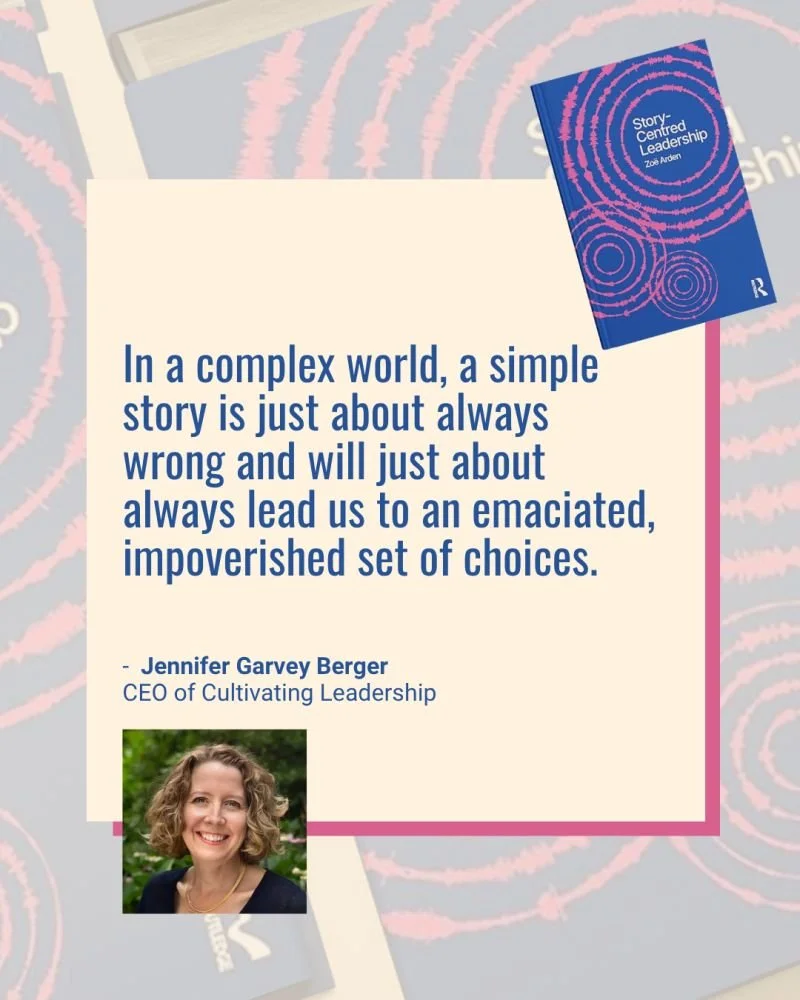
Sometimes the story that makes a problem easiest to understand also makes it harder to solve.
We like an easy explanation. This happened because of x reason. This person is responsible. This is what we need to do next.
There’s a reason for that. A simple story gives us something solid to work with when the reality around us feels uncertain.
But in complex situations, the story can become a trap.
From Evidence to Understanding
“I assumed as an engineer that if you got your facts right, what you were advocating for would be positively received. But there are so many conversations where you have the facts but can’t get others to listen.”
My good friend and CISL fellow Ian Ellison said this to me a while ago and there’s something very understandable in the assumption. If you’ve got the data, double-checked the evidence and come to a conclusion, it should be enough to persuade people. Shouldn’t it?
How Can Leaders Manage Difficult Conversations?
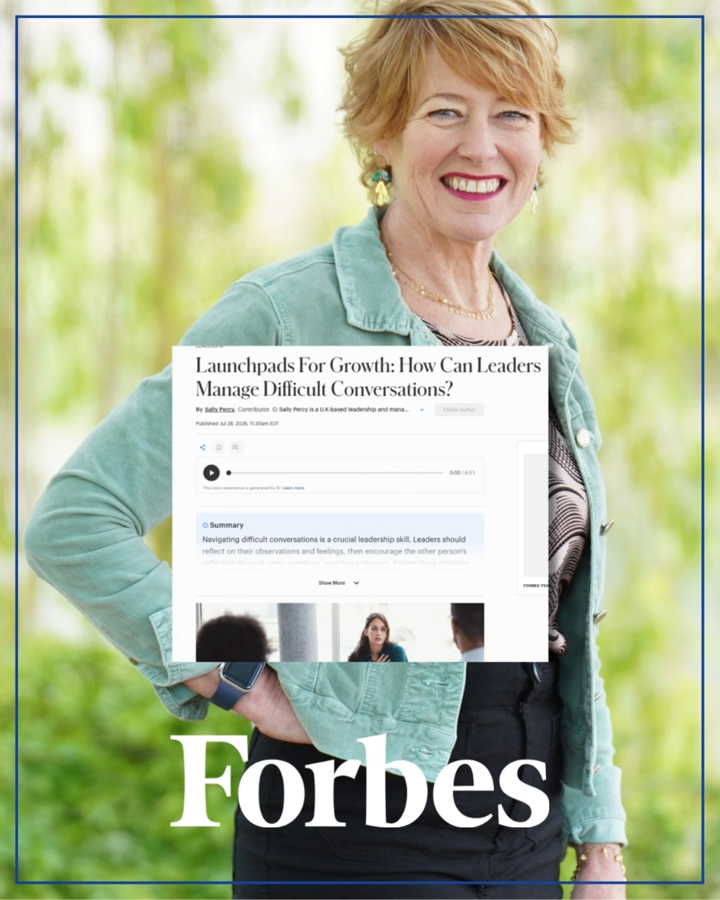
Listening is the foundation of story-centred leadership. It sounds simple, but in practice it can be one of the hardest things to do well.
If you’ve ever caught yourself listening while simultaneously preparing your response, it’s easy to mistake waiting for your turn to speak with actual listening.
I’ve caught myself doing this too. Someone is sharing an idea, and part of my mind is already moving ahead to what I want to say next.
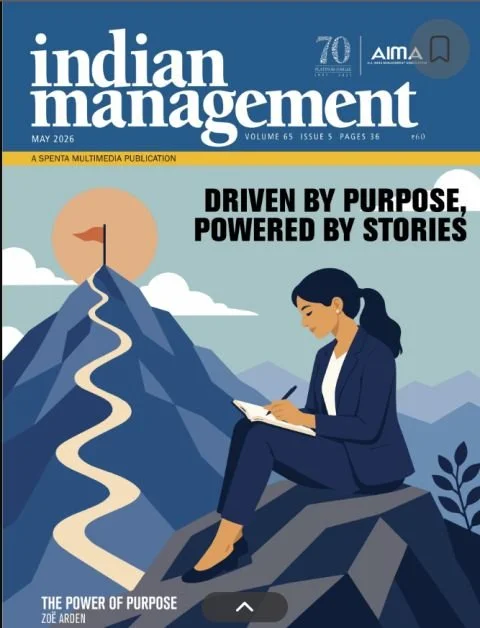
Driven By Purpose, Powered By Stories
We invest a lot of time and energy thinking about how our organisations are described.
What's more revealing is how people describe them to each other.
People can usually tell the purpose and they know the values. They're written down and often genuinely believed.
But it doesn't take long before the stories start to emerge. It only takes a decision made under pressure for it to cut across those values. For example, someone being asked for honest feedback and discovering there are limits to how honest they can be.
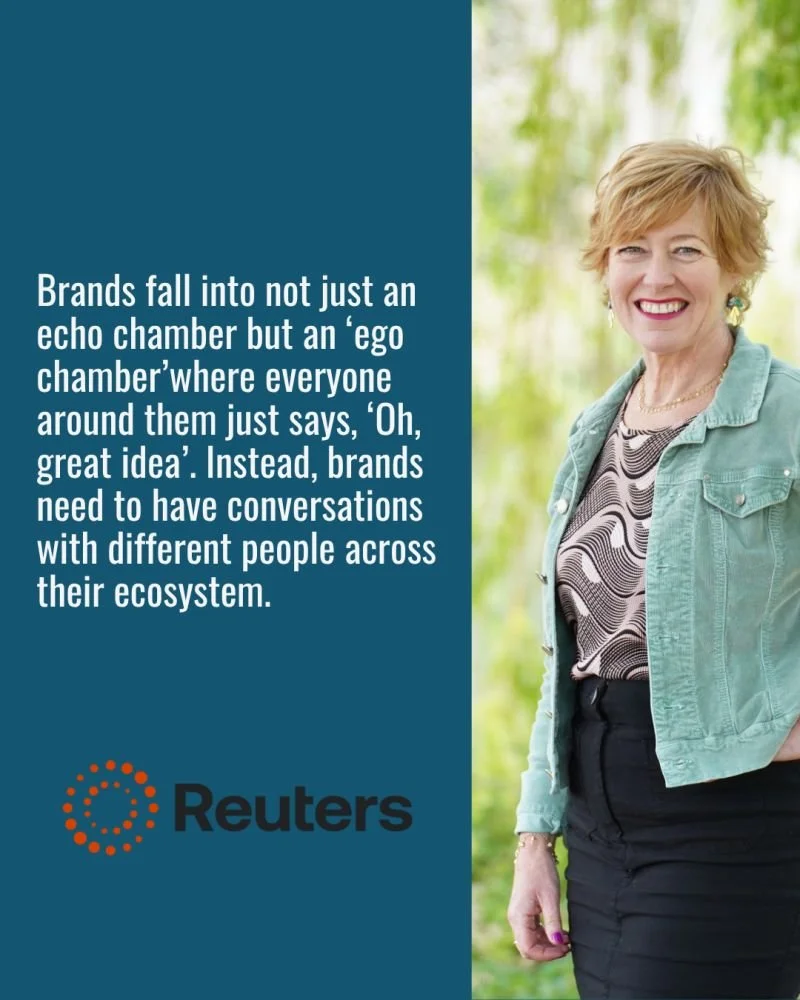
How Letting Go Of The Script Allows Brands To Tell Better Sustainability Stories
Sustainability communications have developed their own house style, and that is part of the problem.
The intentions behind them are often genuine. But when the same phrases circulate across the same networks, validated by the same voices, something starts to close down rather than open up. It's not just an echo chamber. It becomes what I'd call an ego chamber, where everyone around you reflects your own story back at you and says its good.
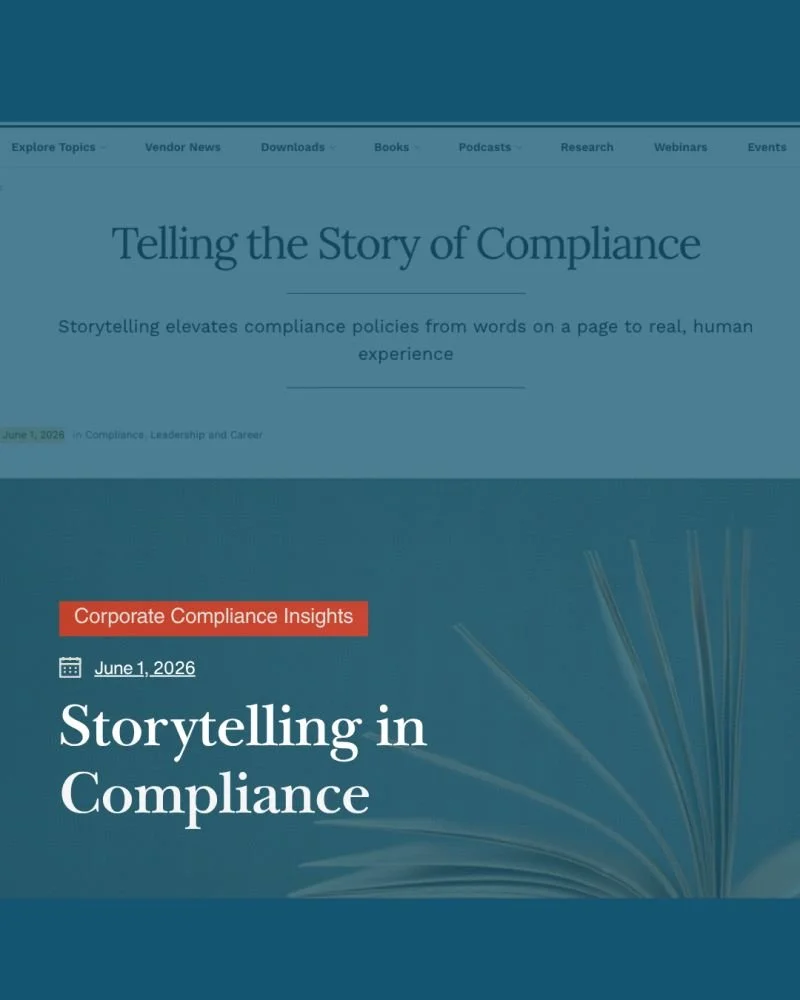
Telling the Story of Compliance
We ask people to care about codes of conduct, conflicts of interest and anti-bribery policies, but what they are usually given as the “why” is an e-learning module and a checklist.
It's not hard to see how compliance can start to feel like a box-ticking exercise rather than something that protects colleagues, customers and communities.
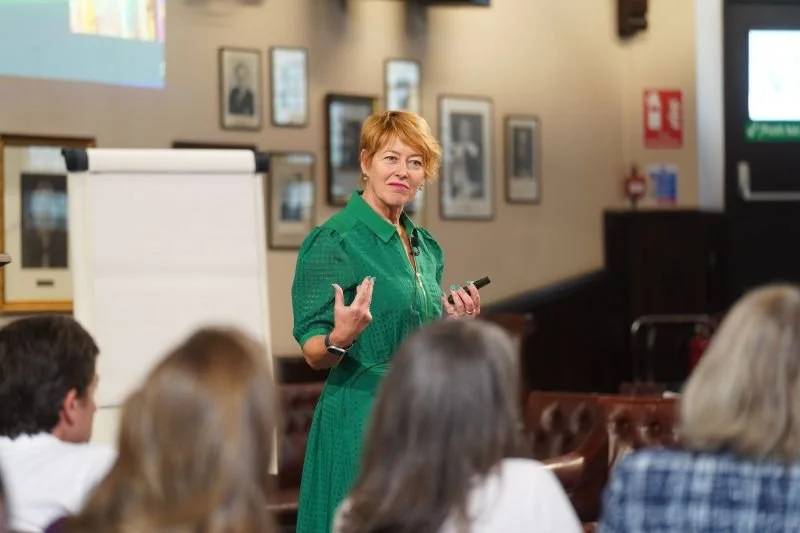
What Story Shapes Your Culture?
May was National Share a Story Month. Most of the focus was, quite rightly, on children: families, schools and libraries making time to read aloud and celebrate the stories that bring people together.
But it also left me thinking about the stories adults gather around at work.
Every organisation I work with is already full of them. Stories about how decisions are really made. Stories about who belongs. Stories about what happens when someone speaks up, challenges the norm or gets something wrong.

Why Stories Are Your Secret Sauce
"Culture eats strategy for breakfast."
This is quoted so often because it speaks to a real problem.
A strategy can be thoughtful, well built and full of good intentions, and still fail to take hold.
Part of the reason is that we pay a great deal of attention to the plan and far less to the invisible operating system underneath it. Culture shapes behaviours, decisions and beliefs, and culture is built on stories.

No Laughing Matter: How Leaders Can Use Humour To Unite Not Divide
When I run storytelling sessions, I often start by asking people to share a story of passion with a partner.
It usually raises a few eyebrows, but the difference afterwards is clear. People laugh, smile and seem more at ease. Part of the point is simply to get their story muscles warmed up by talking about something they genuinely love, whether that is a person, a place or a pastime.
That is quite different from the way many people speak about work.

Don’t Become A Political Referee: How To Lead A Polarized Team
We are very good at turning our colleagues into villains.
It doesn't happen consciously. But when we're under pressure or feel like we're not being heard, the story we reach for is that someone else is the problem.
I was delighted to be quoted in this piece for Forbes by Sally Percy on leading polarised teams.
Turning Insight into Impact
I’ve been thinking about something my boss Susan Butenhoff of Access Brand Communications said to me in San Francisco in the late 1990s.
We were in the middle of the dotcom boom. She was exuberant, smart and completely alive to the moment. She used to say our job in communications was to turn ‘bits and bytes’ into glitz and glamour.

Storytelling and a Sustainable Future
For years, sustainability communication has been built around informing people, assuming that if the case is strong enough, action will follow. In reality, information without orientation leaves people at a distance.
The stories that work do something different. They help people locate themselves inside the problem. They hold the scale of the challenge while making space for what is still possible.