Sometimes the story that makes a problem easiest to understand also makes it harder to solve.
We like an easy explanation. This happened because of x reason. This person is responsible. This is what we need to do next.
There’s a reason for that. A simple story gives us something solid to work with when the reality around us feels uncertain.
But in complex situations, the story can become a trap.
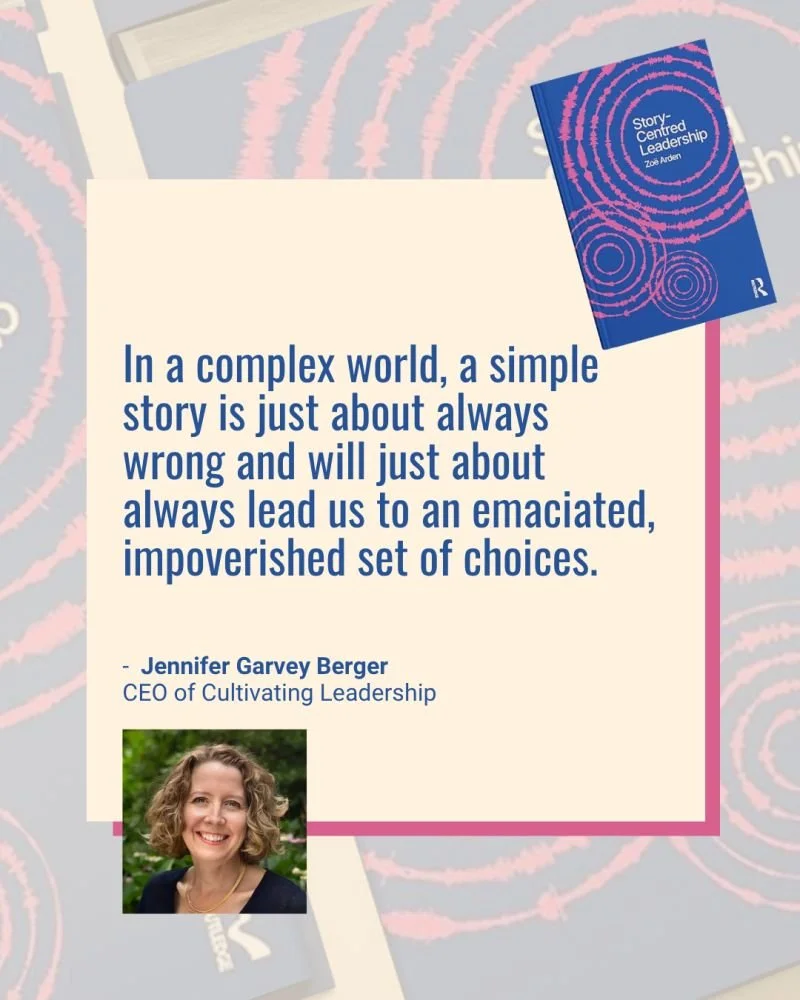
Jennifer Garvey Berger calls this ’the mindtrap of simple stories’. I explore it in Story-Centred Leadership because of what it can do to our choices as leaders.
Once we settle on an explanation, we can stop looking for what doesn’t fit it. We can miss the other factors at play, the perspectives we haven’t considered and the possibilities that sit outside the story we’ve settled on.
The challenge isn’t to make every situation more complicated. It’s to notice when our need for a simple explanation is making the situation smaller than it really is.
In complex environments, staying curious about what we might be missing can open up choices that a neat story would have ruled out.
It’s one of the ideas I explore in my work with leaders by helping raise their self-awareness of the simple stories that are getting in the way.